
Three Years In, Still Learning: In Conversation with Jia Xian Seow and Laurence Lien
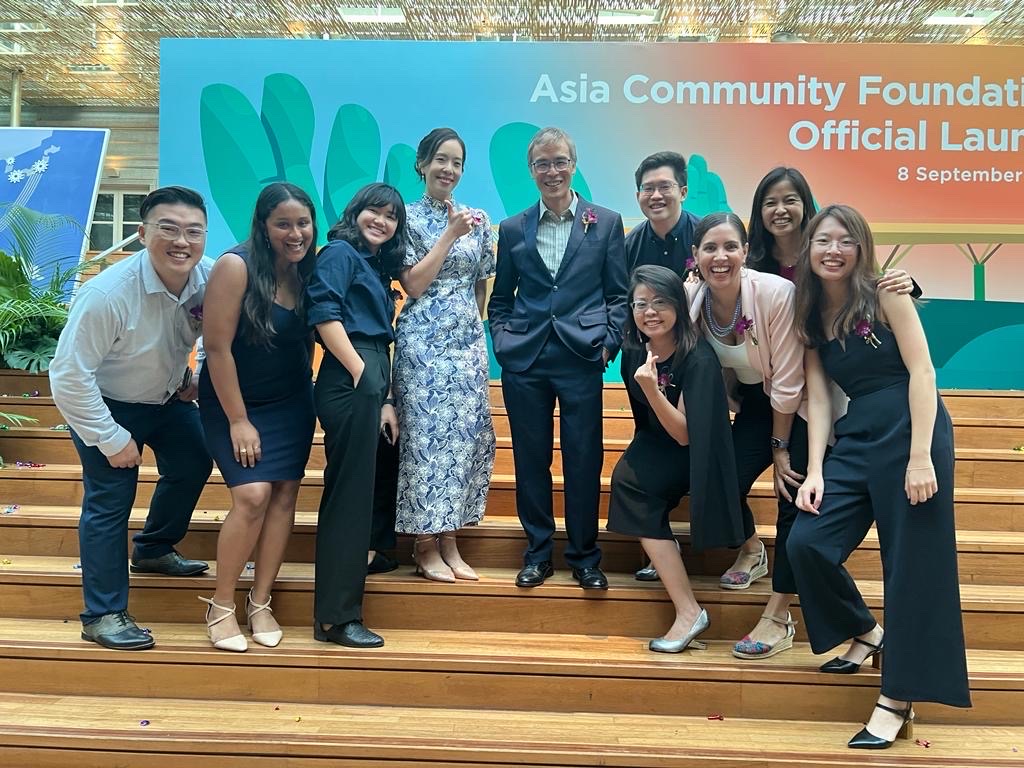
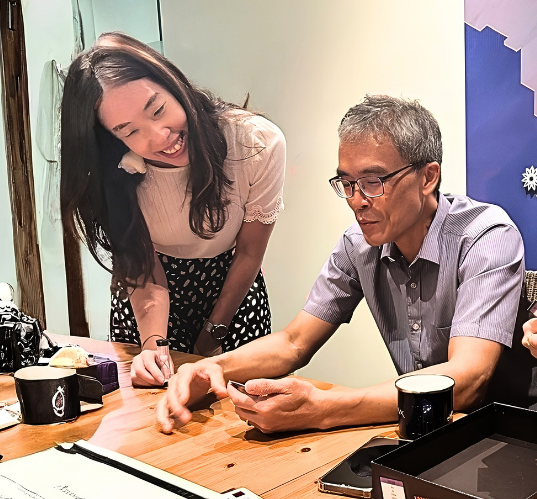
As Asia Community Foundation marks its third anniversary, Co-founder Laurence and Jia Xian, Chief Operating Officer and first staff member, reflect on why the organisation began, what has surprised them along the way, and what still lies ahead.
29 September 2026
Three years may not seem long in an organisation’s life. It is long enough, though, to test an idea against reality. When we sat down with Laurence and Jia Xian, neither spoke of milestones first. They spoke about trust, complexity, and how much there still is to learn.
Starting with trust
When asked ‘Why ACF?’ For Laurence, it came down to a simple observation: giving was harder than it needed to be.
“If the philanthropy process is too difficult, people simply do not give, and opportunities to support good work are lost.”
At the time, few organisations were helping people in Singapore give regionally and overseas. ACF offered a way to build on the community and knowledge that already existed through the Asia Philanthropy Circle (APC), and share it so no donor or partner had to start from scratch.
Beneath it all was one principle: “Philanthropy needs trust.” Three years on, it is still what Laurence is proudest of. “ACF is able to build trust with our partners, both funders and social impact organisations,” he says. “That trust is the foundation we need to build on. Everything else depends on it.”
Growing by listening
That trust has allowed ACF to grow in ways the team did not entirely foresee. For Jia Xian, the change lies less in what the sector needs than in how ACF meets it. “The needs of the sector and the pain points faced by donors have, in many ways, remained consistent,” she says. “What has evolved rapidly is ACF’s ability to respond to these needs.”
ACF began by building its grantmaking and compliance processes through donor-advised funds. It then moved into collective and pooled giving. Most recently, it has begun hosting and providing backbone infrastructure for philanthropic projects across the region.
For Laurence, some of that growth came from unexpected places. An example was ACF launching Shared Impact Philanthropy (ShIP) to support larger-scale giving across Asia. Designed for funders managing significant portfolios or working across multiple markets, ShIP combines grantmaking and fiscal hosting with shared infrastructure across due diligence, compliance, finance and operations. In many ways, it is a response to what partners were already asking for.
The harder lessons
Not everything has come as readily. Asked whether the original vision has come to fruition, Laurence answers carefully. “In some ways, yes,” he says. “Although getting newer funders to come on board has been more challenging. It takes time to motivate people to give.”
Before the technical side of philanthropy advisory comes into play, he explains, people need to understand what motivates them to give and what they care about. “There is a need to light that fire in them.” It is slow, patient work, and it is far from finished.
For Jia Xian, the harder lessons have come from the nature of cross-border giving itself:
“Confidence in cross-border giving is not just about having sufficient resources, or even the right governance architecture and processes. It is also about being clear-eyed about the risks you are prepared to take when they cannot be fully mitigated, and building genuine relationships with people who know the ground intimately.”
“It has been a very humbling experience,” she adds. “The more I learn, the more I realise how much I still do not know.”
Still building the bridge
If there is one thing that complexity has taught her, it is that no one does this alone. “There is a real willingness within this sector to collaborate,” Jia Xian says. “Sustainable change is simply too complex for any one organisation to achieve alone.” She credits ACF’s growth to “a growing family of fantastic people”, from the team, Board and Committees to the partners, funders and advisors who have journeyed alongside it.
Looking ahead, she wants ACF to strengthen its own foundations, advocate for greater capacity-building support for organisations across Asia, and keep promoting thoughtful, strategic giving. Laurence, meanwhile, is thinking further out. He imagines a future where technology helps partners share what they know once, rather than repeatedly for different funders, creating “a shared layer of philanthropic intelligence” for the whole ecosystem.
Both, in different ways, describe the same ambition. As Jia Xian puts it, she hopes ACF can continue to be “a trusted bridge between donors and communities, between resources and needs, and between people who want to make a difference and those who understand what meaningful change on the ground really takes.”
As ACF enters its fourth year, there is still plenty to do, and plenty we are still working out. We’re grateful to everyone who has been part of the journey so far, whether as a funder, partner, advisor or friend. We look forward to continuing the work with you in the years ahead.