By Martin Choo and Priscilla Seet, 29 July 2026
Over four days in July, we travelled to Kuala Lumpur and Melaka to meet with several social impact partners, including non-profits and a government-funded intermediary that supports Malaysia’s broader social sector. The visits provided a valuable opportunity for Asia Community Foundation (ACF) to strengthen relationships, better understand the evolving philanthropic landscape in Malaysia, and hear directly from non-profits about the opportunities and challenges they face.
Across our conversations with partners, three common themes emerged.
1. Operating environments are becoming increasingly complex
While there is growing interest in philanthropy and social impact in Malaysia, many non-profits continue to navigate an increasingly complex operating environment amid evolving policy shifts and broader geopolitical uncertainty.
Many partners shared that funding remains largely restricted to project delivery or is fragmented and unpredictable, creating gaps in the operational support that enables effective programmes in the first place. At the same time, retaining talent, recruiting people with the right expertise, and maintaining industry-specific standards continue to be significant challenges, particularly for organisations supporting vulnerable communities such as undocumented individuals, palliative care patients and disadvantaged young people.
These compounding challenges have created the need for non-profits to manage a tough balancing act where resources required to address immediate community needs must be carefully managed alongside longer-term organisational sustainability and capacity building needs.
2. There is a growing need for national–level efforts to address these complex issues
Despite these challenges, partners remain deeply committed to the communities they serve, many having worked alongside them for decades. Over time, these social impact leaders have built deep expertise in their respective fields, becoming trusted advocates for their sectors and valuable partners for governments and local authorities seeking to strengthen social outcomes.
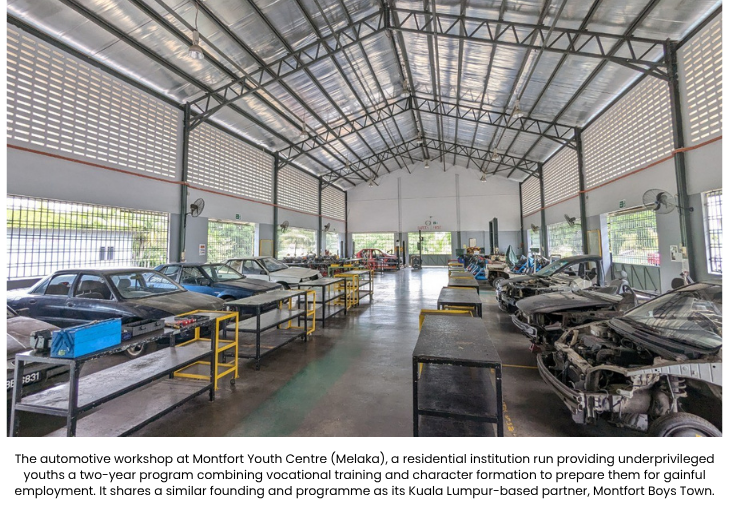
As community needs evolve and operating environments become more complex, these experienced partners continue to adapt. They respond to immediate community priorities (such as creating alternative livelihood opportunities and aligning education pathways with changing industry needs) while also helping to strengthen the systems that underpin long-term impact. This includes developing national palliative care standards and contributing to a nationwide Dementia Action Plan.
Grantmaking intermediaries are also playing an increasingly important role in Malaysia’s philanthropic ecosystem. With more than 1,000 registered NGOs, there is growing recognition of the need to strengthen organisational capacity across governance, financial management, proposal development, and monitoring, evaluation and learning (MEL). At the same time, collaboration and catalytic, multi-year funding are increasingly recognised as essential for testing innovative approaches and generating the evidence needed to influence policy. Rooted in local contexts and connected to trusted networks and partners, intermediaries are well placed to build capacity, convene collaboration, and help translate promising initiatives into lasting systems change.
3. Trust-based relationships are key for long-term impact
For us at ACF, one of the biggest takeaways from the trip was the importance of trust and relationship-building. While funding is a critical aspect of any funder-grantee dynamic, this ultimately depends on strong partnerships built over time, and centred around openness, mutual understanding and a shared commitment to the communities served.
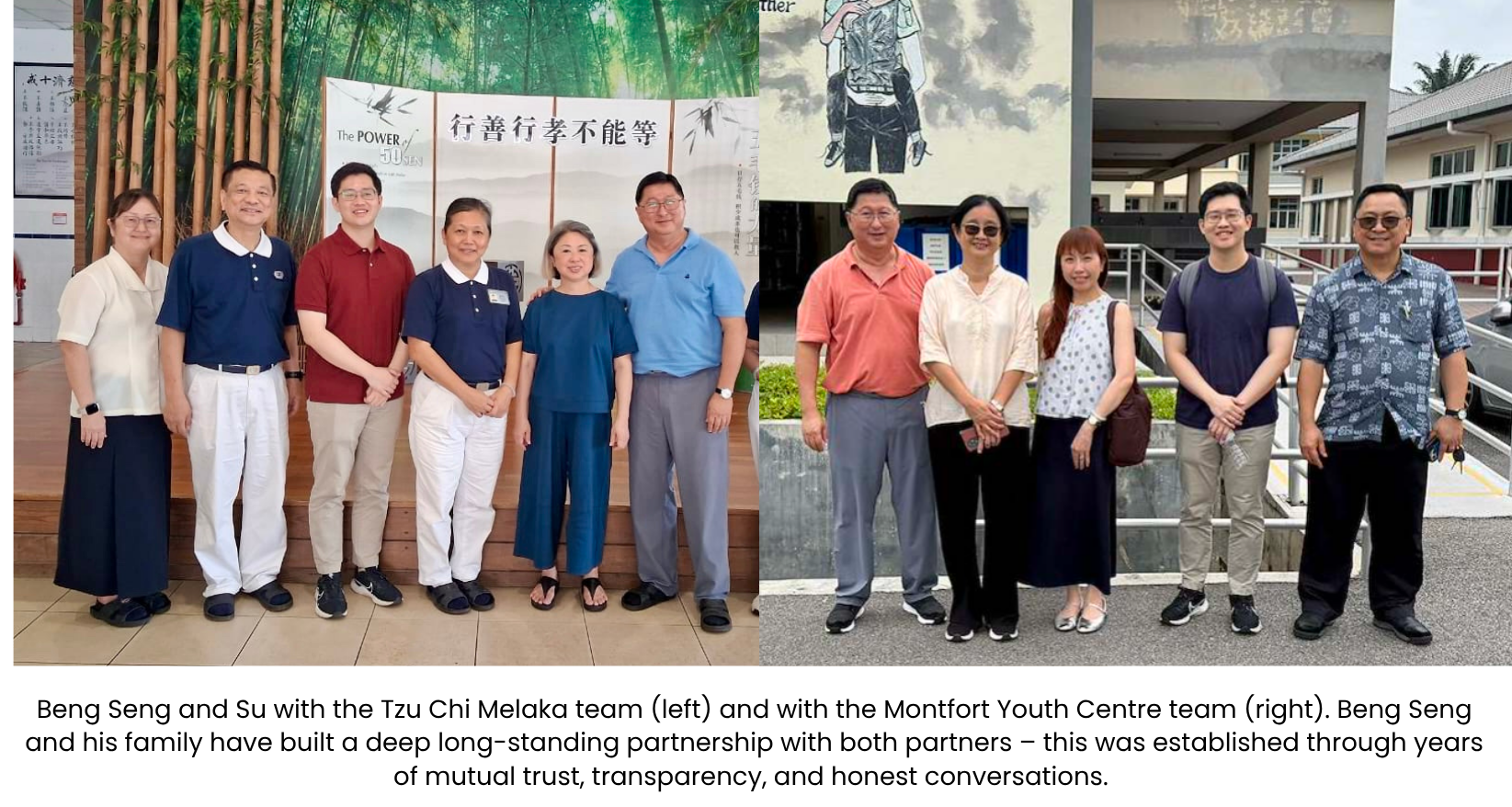
The trip reinforced the value in which operational funding offers for non-profits. We were pleased to be joined on some of our visits by Beng Seng, a philanthropist and member of Asia Philanthropy Circle who is based in Malaysia, and shared that “Flexible funding gives charities the confidence to plan beyond the next project cycle, as the fundamental expenses have been covered. It provides reassurance that they can invest in staff, strengthen systems and focus on programme delivery over the long run.” This perspective resonated strongly across many of our conversations, especially from impact leaders who echoed the importance for multi-year funding.
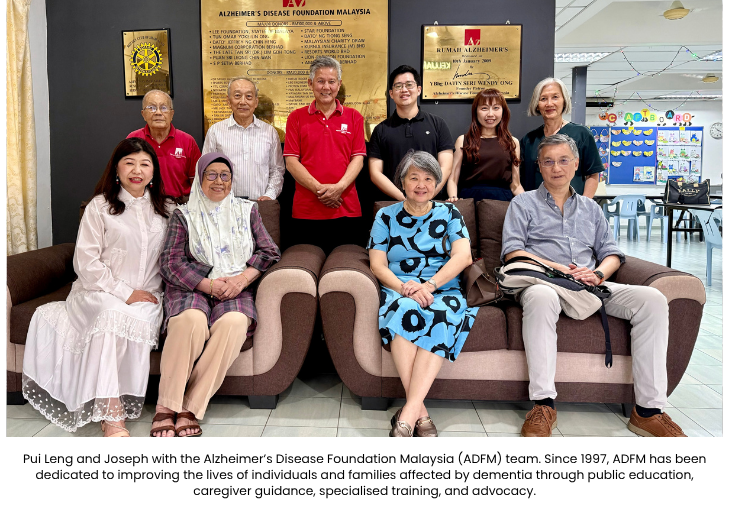
We returned from Malaysia inspired by the dedication and resilience of the leaders and practitioners we met, some of whom have served the same organisation for more than 20 years. The visit reinforced that meaningful philanthropy is not only about providing funding, but also about listening, learning and building trusted relationships with both social impact partners and donors—relationships that deepen over time and ultimately create stronger foundations for lasting impact.
Martin and Priscilla would like to express their gratitude to the following organisations and donors for the warm hospitality, time, and open dialogues that took place during their visits from 20 to 23 July.
Social Impact Partners
- Alzheimer’s Disease Foundation Malaysia
- Fugee
- Hospis Malaysia
- Montfont Boys’ Town (Shah Alam)
- Montfort Youth Centre (Melaka)
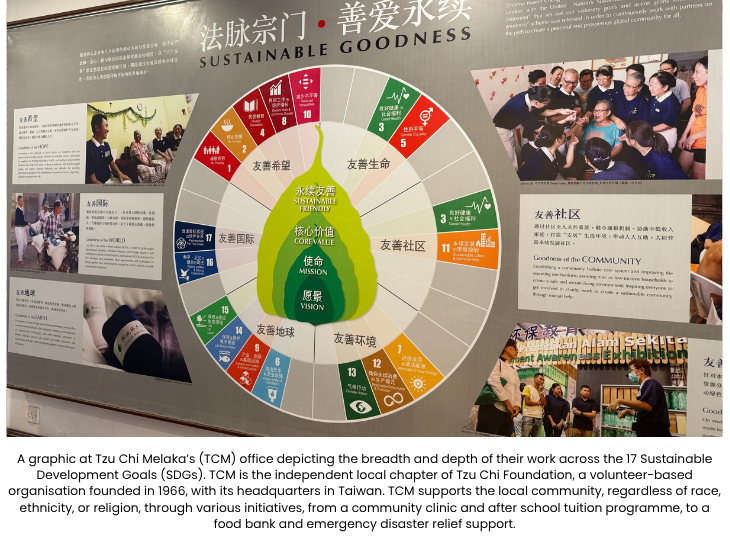
- Tzu Chi Melaka
- Yayasan MySDG Foundation
Donors
- Beng Seng and Su
- Pui Leng and Joseph